Investigation Launched After Missing Teen’s Body Found in Singer D4VD’s Impounded Car

D4VD Tesla


……………………………………………………………………………………………………………………………………………………………………………

   Main Points

  • D4vd impounded car found with a dead 15 year old girl in the “frunk” (front trunk)
  • D4vd reportedly has been cooperating 
  • Girl has been missing for over a year

……………………………………………………………………………………………………………………………………………………………………………

Los Angeles CA – a homicide investigation is underway against David Anthony Burke, a 20 year old singer and social media personality known as D4vd, and Celeste Rivas Hernandez, a 15-year-old girl.

Celeste’s body was found decomposing, it was found in the “frunk” (front trunk) of David’s impounded Tesla. The body was discovered on September 8 2025. Celeste was reported missing in April 2024. A foul odor coming from the vehicle alerted one of the tow yard workers to call the cops, which led the cops to finding the body. The Los Angeles Police Department (LAPD) has an ongoing homicide investigation, seizing evidence like electronics, serving search warrants, and looking through details, though no arrests have been made and D4vd is reportedly cooperating.

TimeLine

  • On Sept. 8, 2025: Human remains found in a bag inside the “frunk” (front trunk) of D4vd’s Tesla at a Hollywood tow yard after a report by the worker of a foul odor.
  • Sept. 16, 2025: Remains identified as Celeste Rivas Hernandez, who was last seen in April 2024 in Riverside County.
  • Sept. 17, 2025: The Los Angeles Police Department’s Robbery Homicide Division serves a search warrant at a Hollywood Hills home where d4vd had been staying, seizing computers and other electronics.
  • Late Sept. 2025: d4vd and his manager had reportedly vacated the Hollywood Hills home owned by David.
  • The Current Status: The medical examiner has ruled the death an ongoing homicide but listed the cause of death as “deferred” as there pending further results.

Connections Between D4vd and 15 Year Old Celeste Rivas Hernandez

Friends of David had reportedly believed that Celeste Rivas Hernandez was his 19 year old girlfriend, even though she was 15 years old. Rivas Hernandez’s mother confirmed her identity using a description including a “Shhh” tattoo on her finger. She told police the teen had previously ran away before to be with a “David,” and noted that d4vd also has a similar tattoo like hers. A teacher has claimed that Rivas Hernandez had previously ran away to Hollywood to be with the singer but was returned to her Lake Elsinore home

Picture of Celeste and David

Career and Public Relations Fallout

D4vd’s “Withered” world tour has been canceled following the discovery of the teens body. He had started the tour in August 2025, with scheduled stops in the U.S. and Europe. Promotional activities for his new deluxe album were reportedly postponed by his label, Universal Music Group (UMG). 

Festival appearances, such as at Spilt Milk in Australia, and brand collaborations Crocs, and Hollister were canceled or dropped. Online communities noted unsettling parallels to his music, including his song “Romantic Homicide” and a music video showing a bloody body being dragged to a car trunk. 

This has started lots of internet speculation and driven up his streaming numbers. The singer’s social media has been invaded by critical commentary, and his subreddit was locked due to the inane amount of online theories.

 Official Statements and Legal Status

A spokesperson for d4vd stated he is “fully cooperating with authorities” in the ongoing homicide investigation. The Los Angeles Police Department has many time clarified that d4vd has not been a formally named a suspect in the homicide investigation. No charges have been filed against d4vd in connection with Celeste Rivas Hernandez’s death


What is Murder?

What is Murder?

Murder, The intentional killing of another person, is one of the most serious crimes in legal systems worldwide. It is universally condemned and carries significant legal and moral consequences. However, beyond the headlines and statistics, murder is a complex issue rooted in a variety of causes ranging from personal motives to systemic failures. Understanding the nature, types, and causes of murder can shed light on how societies respond to and prevent these very, very tragic events.

The Legal Definition Of Murder

Murder is defined as the unlawful killing of another person with ¨malice aforethought¨. This term refers to the perpetrators intent to cause harm, whether premeditated or impulsive. Legal systems often distinguish between different types of murder, typically categorized into degrees based on the severity of the crime and the intent behind it.

  • First Degree Murder: Refers to a premeditated killing, where the act is planned ahead
  • Second Degree Murder: Involves intentional killing, but without prior planning. It may occur in the heat of the moment or as a reaction to some circumstances 
  • Manslaughter: Though not considered murder, is often grouped with homicide crimes. It involves killing without malice such as in cases of recklessness and negligence

These distinctions are important because they determine the legal penalties, which can range from lengthy prison sentences to, in some jurisdictions, the death penalty. Understanding the varying degrees of murder can also help in analyzing the psychological and situational factors behind these violent acts. 

Causes and Motivations

While every case of murder is unique, certain patterns and factors often contribute to why individuals commit these acts. Some of the most common motivators include:

  • Personal Conflicts: Many murders arise from interpersonal disputes, such as domestic violence, love triangles, or longstanding grievances. These murders are often driven by emotions like anger, jealousy, or revenge.
  • Financial Motives: In some cases, people commit murder for financial gain. This might include killings related to robbery, fraud, or inheritance disputes.
  • Mental Illness: Although rare, some individuals with severe mental disorders may commit murder due to delusions, paranoia or other psychological impairments. While not all individuals with mental illness are violent, those with untreated or extreme cases may pose a risk to themselves or others.
  • Gang Violence and Organized Crime: Murders are often linked to gang-related activities or organized crime syndicates. In these cases, killing may be used to eliminate rivals, send messages, or protect business interests. Such crimes are notoriously difficult to solve due to the fear of retaliation and the code of silence within these groups. 
  • Mass Shootings and Serial Killers: Some of the most disturbing forms of murder involve mass killings or serial murders. Mass shootings typically involve a single event where a perpetrator kills multiple people, often motivated  by ideology, grievances, or mental health issues. Serial killers, on the other hand, murder multiple victims over a period of time, often driven by a need for control, power, or other deep-seated psychological issues.

The Impact On Society 

The impact of murder ripples far beyond the victim. Families are shattered, communities are shaken, and law enforcement is tasked with solving often-complex cases. The psychological and emotional toll on the victims’ loved ones can last a lifetime.

Moreover, fear and anxiety can permeate neighborhoods where murders are frequent, leading to heightened tensions and distrust of law enforcement. In some cases, especially in areas with high crime rates, residents may be reluctant to cooperate with police investigations due to fear of retaliation, a lack of faith in the justice system, or personal relationship with perpetrators.

From an economic perspective, murder cases strain public resources. Investigating homicides requires considerable law enforcement attention, forensic resources, and, when cases go to trial, legal expenses. The more murders that occur in a community, the more public services are strained, diverting resources from other important areas like education or public health.

Ultimately, murder is a reflection of deeper societal issues. While law enforcement can help solve and prevent these crimes, addressing the root causes-such as inequality, mental health, and systemic failures-requires a broader, sustained effort from all corners of society.

The Body on Somerton Beach

The Body on Somerton Beach

The Man

On the morning of December 1st, 1948, just southwest of Adelaide, South Australia, on Somerton Beach, John Bain Lyons and his wife noticed what seemed to be a corpse of a man with his head lying against the seawall, legs stretched out with his feet crossed. He extended his right arm up, and then let it fall down. He looked both drunk and asleep to the couple. The police were soon contacted, and the man was brought to the Royal Adelaide Hospital.

At the hospital, an autopsy was conducted. Dr. John Barkley Bennet estimated the time of death at around 2:00 am, with the cause of death being supposed to be heart failure, likely being caused by poisoning. The man wasn’t identified, still being a mystery to this day. Searching the contents of the man’s pockets, they found an unused train ticket from Adelaide to Henley Beach, a bus ticket, a US manufactured aluminum comb, a half-eaten pack of chewing gum, a packet of Army Club cigarettes containing only 7 cigarettes that belonged to a different brand, and a quarter-full box of matches. The man carried no ID, and all of the labels on his clothes had been removed. Detectives noted that he had one pocket in his pants that had been repaired with an orange thread.

The Suitcase

A few days prior to the discovery of the body, November 30th, a brown suitcase with a removed label was checked into the Adelaide railway system cloakroom. Staff discovered it a while later, on January 14, 1949. It contained the very same orange thread that was used to repair the pocket in the body’s pants. In the suitcase, the names “Keane” or “Kean” appeared regularly throughout the search. The name “T. Keane” was found on a tie, “Keane” on a laundry bag, and “Kean” on an undershirt.

The rest of the contents contained a stencil kit, a table knife with a cut down haft, a dressing gown, a red felt pair of slippers, four pairs of undergarments, Pyjamas, shaving items, a light brown pair of pants, an electricians screwdriver, a pair of scissors, and a small square of zinc.

The Final Piece

Coroner Thomas Erskine Cleland, Emeritus Professor of Pathology at the University of Adelaide, conducted an inquest of the body a few days after its initial discovery at the beach. However, this was adjourned until June 17th, 1949. Cleland re-examined the body and all of its belongings. During this, he made a discovery which every examiner had missed. He found a tightly rolled piece of paper stored inside of a small pocket that was sewn into the pants of the corpse. The paper, when opened, contained the printed words “Tamám Shud”.

Public libraries had translated the Persian phrase into the words “finished” or “it has ended”. They had also recognized the words to belong to a book titled “Rubaiyat of Omar Khayyam”. A full Australia wide search for the copy of the same book had soon been conducted, but provided no results for some time.

A burial for the man had been arranged, but police had embalmed the man beforehand, creating a cast of the head and upper torso. His body then was buried under a plot of dry ground, sealed by concrete. After the burial, flowers started appearing around the grave at strange intervals. The person or people that left the flowers are still unidentified.

Eight months after the search for the copy of the Rubaiyat, a Glenelg man, with the alias of “Ronald Francis”, showed the police a 1941 version of the translated Rubaiyat. This book had the same phrase ,“Tamám Shud”, from the torn paper found on the body. The man didn’t know that this book was connected to the corpse until the day before when he saw a search for it in the newspaper.

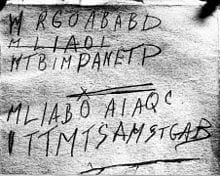
On the back of this returned book lies five lines of faint letters, resembling a code. The second line had been crossed out, hinting at an encryption error. The first 3 lines had been separated from the last 2 by an X with 2 strikes through it. The message is listed below:


WRGOABABD

MLIAOI

WTBIMPANETP

           X

MLIABOAIAQC

ITTMTSAMSTGAB

Decoders were unsuccessful in cracking the code. The message was sent to Naval Intelligence, but was again unsuccessful. The code was then published to the public, leaving amateur decoders stumped. The Navy soon decided that the code was uncrackable.

This is the final piece of evidence that police and investigators ever recorded since the 1950s. The mystery was put at rest, leaving it unsolved. Many people have decided to pick the case back up in recent years, but have been unsuccessful. The case still remains a mystery, with the man never being identified, and with the killer still on the loose.

Famous Serial Killers

SERIAL KILLERS

Serial killers are people who kill multiple people and often don’t have a real motive. They also tend to follow behavior patterns with their murders. Although Serial killers are very terrible people it is interesting to see into the life of one. These are some famous US serial killers and a small look into their lives.

Jeffery Dahmer-

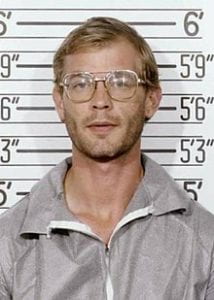
Jeffery Dahmer

Jeffery Dahmer was born in 1960 and started killing in 1978, when he was 18 years old. His childhood has been debated but most people believe he was neglected as an infant. Jeffery usually killed young, gay, black men. Jeffery Dahmer killed 17 people before a a man named Tracy Edwards escaped him, and his story led to jeffery’s arrest. Jeffery Dahmer was sentenced to 15 life sentences and he served 3 years and 4 months in prison before he was killed. Jeffery Dahmer was beaten to death by a man named Christopher Scaver who was also a prisoner.


Harold Shipman-

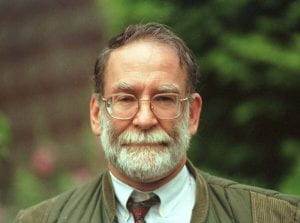
Harold Shipman

Harold shipman (Also known as Dr. Death) was born in January, 1946. It is estimated that he killed about 250 of his patients. He mostly killed elderly woman, and they were supposed to have died in there beds. Harold Shipman was caught after trying to forge the will of one of the patients he killed. Harold was arrested in the year 2000 and sentenced to Life in prison. He served 4 years in prison before he decided to hang himself.


H.H. Holmes-

H.H. Holmes

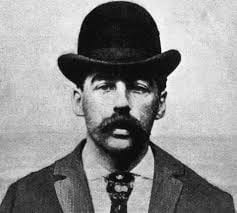
H.H. Holmes was born in 1861 and moved to chicago in 1893 where he started outfitting a three story hotel (Later to be known as the Murder Castle). He put all kinds of things in the hotel including gas lines, secret passages and trapdoors, hallways to dead ends, chutes to the basement, soundproof padding, and torture devices put throughout a maze. Holmes used the gas to knock out his victims before  bringing them to his surgical tables. He disposed of the bodys with a furnace in the basement. Despite Holmes admitting to killing 27 people he was only sentenced for the murder of his business partner Benjamin Pitezel. Holmes was executed by hanging him in 1896. It was said that he killed anywhere between 20 and 200 people.


Pedro Lopez-

Pedro Lopez

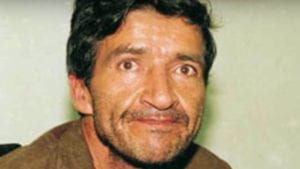
Pedro Lopez (aka Monster of Andes) was born in 1948 and was said to have killed at least 110 people from 1969 to 1980. Pedro mostly killed young girls between the ages of 9 and 12 years old. Despite his terrible crimes he only served 16 years before being released for “good behavior”. Even today Pedro Lopez’s whereabouts are unknown.


Ted Bundy-

Ted Bundy
Florida Photographic Collection

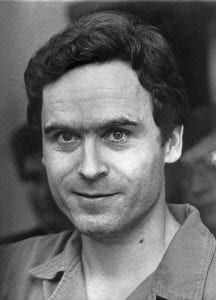
Ted Bundy was born in 1946 and loved attention for his kills. Bundy had a complicated childhood, for starters his sister was actually his mom. Although according to a article written by Ann Rule bundy had known. And it it suspected that Bundy’s grandfather had abused him psychologically and physically, although bundy later claims to have a good relationship with him. Bundy killed and raped mostly collage aged woman. Ted bundy admitted to killing 30 people even though it is believed that he killed more. One woman named Carol Deronch was able to escape from ted bundy and later identify him in a police lineup. Ted bundy was arrested during after speeding in a stolen car. Ted bundy was sentenced to death in 1979. He was in prison for 9 years before being executed via electric chair.


SOURCES:

https://www.britannica.com/list/7-of-historys-most-notorious-serial-killers

ttps://www.biography.com/crime/hh-holmes#murder-castle

https://www.biography.com/crime/ted-bundy-childhood

https://www.crimeandinvestigation.co.uk/article/the-women-who-survived-ted-bundy

The Case of Sherri Rasmussen

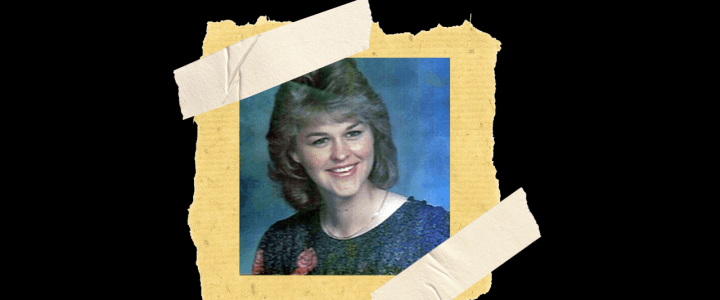
Sherri Rasmussen

The Murder

On the evening of February 24th, 1986, John Ruetten would return home from work to find his wife, Sherri Rasmussen, laying dead on the floor. She was shot 3 times and had a bruise on her face, with a porcelain vase being broken over her head. Sherri also had a bite mark on her arm, that an investigator noticed and obtained a swab of, which was then determined to belong to a female. The case was eventually dropped, being decided as a burglary.

In 2009, however, Jim Nuttal and Pete Barba brought the case back up as their burglar theory was invalid, because of the female DNA. As they investigated the case, more evidence appeared that proved the burglar theory to be incorrect.

Another Investigation

The evidence, before the 2nd investigation, suggested that a struggle began upstairs between Sherri and the culprit, ending at the 1st floor with Sherri dying. More evidence appeared in the 2nd investigation that proved this wrong. At the top of the staircase was a pile of stereo equipment on top of a VCR. If the struggle first began upstairs, leading downstairs, the stack of the equipment would likely have been knocked over, however the equipment was standing upright. For this to happen, the culprit would have had to go back up the stairs and re-stack the pile of the equipment. This is very unlikely to happen as when a burglar succeeds, their main priority is most likely to flee as soon as possible, proving that there was no burglar.

To support this theory, a fingerprint was found on the stack of equipment, but it had no print, suggesting that the culprit had gloves on. The blood was later proved to be Sherri’s, meaning that after she was shot, the culprit stacked the stereo equipment at the top of the stairs to make the case look bigger than what it really was.

From this, the detectives narrowed down their suspects to five females. One of these suspects was a woman named Stephanie Lazarus.

Stephanie Lazarus

Stephanie had dated John before Sherri. Both had never considered that they had major relationships. A bit into their relationship, John had accepted a job to be a hard drive manufacturer, and Stephanie had applied to be a LAPD uniformed officer, and was accepted.

Eventually, John had met Sherri and was then dating her behind Stephanie’s back. Stephanie later learned that John and Sherri have had a serious relationship. Stephanie wrote to John’s mother, “I wish it didn’t end the way it did, and I don’t think I’ll ever understand his decision.”

During John and Sherri’s engagement, Stephanie would often visit the apartment that John and Sherri shared. Stephanie would make excuses like her skies needed waxing. Sherri was bothered by Stephanie’s visits and was beginning to question their relationship. She eventually asked John to tell Stephanie to stop the visits. John responded to her cries by saying that, “They were just friends” and “You should just ignore her.”

It eventually escalated even farther. Stephanie would start to stalk Sherri on the streets. According to Sherri’s father, Nels Rasmussen, Stephanie would visit Sherri in her office and tell her that her relationship with John was not over, and “If I can’t have John, no one else will.”

The two detectives, Jim and Pete, learned that Stephanie was a LAPD Officer, and had been promoted to work on art theft cases as a detective. She was one of the only two detectives in the nation’s full time unit that were devoted to this specialty. She was noted as one of the least promising suspects by the detectives, however, since Stephanie was still in the department, they had to work carefully.

As the investigation continued, they narrowed down the suspects as more evidence appeared. At the end of this, the only suspect left on the list was Stephanie. Now they had to be extra careful; they referred to Stephanie as “No. 5” and would only work after hours.

They proceeded to look into details about Stephanie’s life back in the mid-80’s. They gathered intel from another detective and learned that at the time, the weapon that most officers would use as a backup was a .38. Stephanie used that type of gun. Jim and Pete then supposed that the best time to commit a murder like this, while working for the LAPD, was to commit it on a day off. Sherri had been murdered on one of Stephanie’s days off.

To add even more to the evidence, the murder weapon had been disposed of after the crime. For a police officer to lose or dispose of a major weapon would cause severe penalties, so using a backup weapon would be the obvious choice. As stated before, Stephanie had the same type of backup weapon that was used in the crime.

It was now clear to Jim and Pete that Stephanie was the murderer, but they had to prove it. They worked discreetly and informed superiors about the investigation. The detectives wanted to take a DNA sample from Stephanie. When Stephanie disposed of a cup that she had been drinking from, the detectives swiped a DNA sample from it. When tested, the DNA had matched the DNA from the bite mark on Sherri’s arm. They had found the culprit.

The Arrest

With the careful planning for the arrest, officers waited outside of Stephanie’s home. A short time after they had all lined outside, they received a call from the department headquarters. They requested that the officers would wait at the headquarters instead of Stephanie’s house, as she would be required to give up her equipment there. This would limit the risk of Stephanie retaliation when learning that she was the prime suspect of the murder.

When she arrived, she was asked to talk in an investigation room just to “tie some loose ends” in the Sherri Rasmussen case. While the interrogation went on, she said she didn’t remember most things about the case, since it had been many years since, but seemed to remember some. She admitted to visiting Sherri’s office and seeing John at his condo. The interrogation eventually escalated to the point where Stephanie decided to leave the room altogether. While walking down the hallway, she was met with officers that swiftly put her under arrest.

In early 2012, the trial began for Stephanie. The prosecutors accused that the murder was committed over jealousy from Sherri’s relationship with John. Defense said that Stephanie’s friends denied that she had any violence towards the failed relationship with John. They called their last witness who said that some fingerprints found in the investigation did not belong to Stephanie.

Prosecution showed the jury photos of Sherri and her found body. They said the fight wasn’t fair. The prosecutors reminded that there was no alibi for Stephanie at the time of the murder. Some time in March, Stephanie Lazarus, was convicted of first degree murder. She was sentenced to 27 years to life in prison. She is currently serving her sentence in the California Institution for Women in Corona.

Source: https://en.wikipedia.org/wiki/Murder_of_Sherri_Rasmussen

44 Days of Pure Torture – The Case of Junko Furuta

44 Days of Pure Torture – The Case of Junko Furuta


The case of Junko Furuta is a very dark, soul-crushing story. This girl was subject to torture, murder, and many other heinous crimes. 

  • Junko Furuta is a 16-year-old girl, living with her parents, and her older and younger brother. As she grew up, she attended Yashio-Minami High School, a private high school in Yashio, Japan. She worked part-time jobs at a plastic molding factory after-school to afford her school expenses and to save up for a trip after graduation. Furata later accepted an after-graduation job at an electronics retailer. While at school, Junko was very liked and appreciated by her schoolmates. She was very popular and people idolized her for her effort put into school work and her dreams of becoming a Japanese singer. The night of the attacks, Junko noted that she was looking forward to watching the final episode of Tonbo (Dragonfly) とんぼ, a Japanese drama, while not being able to watch it.

On November 25, 1988, Miyano and his friend, Minato, both perpetrators in the trial, wandered the streets of Misato intending to rape the local woman who were walking home at the time. They later found Furata, riding her bike home after a long shift at her job. Minato later was ordered to kick Junko off her bicycle and rob her by Miyano. Under the assumption that Miyano witnessed the attack by accident, he ran up to Furata and helped her up, offering to walk her home safely.

  • Hiroshi Miyano, an 18-year-old male, had frequent run-ins with the law. He had problematic behavior since his childhood, such as damaging school property and shoplifting. These offenses gave Miyano a bad reputation in his small community. Later, in April 1986, he enrolled in a private high school in Tokyo, Japan, which is where he converged with the other men connected to this crime. Even though he dropped out of this school after only a year, he continued to commit multiple crimes during his school time, slowly escalating over time. At this time, he was living with his girlfriend, the older sister of Yasushi Watanabe, another perpetrator in this crime. He picked up jobs working as a tile worker, attempting to save up enough money to later propose to her. Dissatisfied with the pay he was making, he frequently became involved with gangs and started committing sex offenses. This behavior later was the reason that his girlfriend started losing interest, ending the relationship soon after.

After gaining Junko’s trust, Miyano later raped her in a warehouse, and later again in a nearby hotel, threatening to kill her if she spoke about the attacks to anyone. Miyano later called his friends over to the hotel, Shinji Minato, Yasushi Watanabe, and Jō Ogura, to report and brag about the rape. Ogura offered the idea of holding her captive, allowing multiple people to sexually assault her during the time they held her. Their group had many crimes against them, recently kidnapping another girl before Furuta, releasing her after only a couple of days.

3:00 a.m., Miyano took Junko into a nearby park, where the rest of the gang was waiting for her to arrive. The boys discovered her home address in a notebook kept in her school bag, threatening to murder the rest of her family while inside the house if she tried to escape the boys’ grasp. The boys overtook her, later taking her into a small house and gang-raping her. This house, which was owned by Minato’s parents, later became their regular gang hangout spot.

On November 27, Junko’s parents notified the police about their daughter’s disappearance. To demoralize her parent’s hope of finding her, the perpetrators forced Junko to call her mother and claim that she had run away, threatening to kill her if she didn’t follow their orders. She also was forced to say that she was safe and hanging out with some friends, those “friends” being Minato, Watanabe, Miyano, and Ogura. Junko was also forced to act as Minato’s girlfriend while his parents were around. They dropped this claim as Minato’s parents stopped caring about what he was doing with his life. His parents later admitted that they did not wanna intervene with Minato’s antics because they were fearful that he would become violent towards them.

On the night of November 28, Miyano invited two other boys to the gang house, Tetsuo Nakumara, and Koichi Ihara respectively. They walked up the stairs, noticing Junko sitting, wearing a long sleeve t-shirt and a skirt that Miyano previously had stolen from a clothing store a couple of days prior. The boys later drank cough medicine, pretending it was drugged, and acted high for a long period. As Junko realized this fact, she tried to run away, screaming in fear and knocking items over. Miyano later grabbed her legs and Koichi Ihara quickly put a pillow over her face. This awoke Miyano’s parents and they proceeded to check on Junko and the boys: Miyano claimed it was nothing and not important. The group then proceeded to gang-rape the woman into a state of unconsciousness: staring at the ceiling while not blinking.

  • This group held Junko captive in Minato’s residence for more than 40 days, where they repeatedly, every day, beat, raped, and tortured her. They also invited other men and young teenagers to come over to the home and encouraged them to take turns having intercourse with her.

According to the groups’ statements in court, they admitted to shaving her pubic hair, forcing her to dance to music while she was naked, and masturbate in front of the boys. They also left her on a balcony in the middle of the night with little to no clothing. They inserted objects into her vaginal crevice and anus, such as a lit match, a metal rod, and an empty alcohol bottle. The boys also force-fed her copious amounts of beer, milk, and water. She was also forced to smoke multiple cigarettes at once and inhale paint thinner, which causes skin, eye, and respiratory system irritation, along with many other side effects. In one incident, Miyano repeatedly burned Junko’s legs and arms with a lighter and a large amount of lighter fluid. 

  • By the end of December, Junko was extremely malnourished after being only fed small portions of food and later being forced to only milk. Due to her several injuries and infected burns, she became unable to walk on her own or even use the toilet. She became confined to only Minato’s room and lay there for 40 days in severe weakness.

Her appearance substantially altered due to the brutality of the acts put upon her. Her face was so swollen that it was difficult or even impossible for her to talk. Her body also became seriously crippled during the months of the attacks, leaving a rotting smell that caused the boys to lose sexual interest in her. As a result of the smell, the boys later found and gang-raped a 19-year-old woman who, just like Junko, was picked up on her way home from work.

January 4, 1989, after losing a game of mahjong, a Chinese game of collecting winning sets of tiles placed on a board, Miyano decided to take his anger out on Junko by again pouring lighter fluid on her swollen body and setting her on fire. Furuta made attempts to put out the fire, gradually becoming responsive after not being able to extinguish it. The boys continued to beat her up, soon igniting a candle and dripping hot wax over her face. They also placed two short candles on her eyelids and forced her to drink her urine.

After she was kicked multiple times, she fell onto a stereo unit and collapsed into a sudden fit of convulsions, and large involuntary movements of the limbs. As she bled profusely while pus emerged from her infected burns, the boys continued to beat her, now donning plastic bags over their hands. They soon dropped an iron exercise ball onto her stomach continuously. These attacks lasted multiple hours and she later succumbed to her wounds and died shortly after the two-hour mark.

Less than 24 hours after Junko’s death, Minato’s brother called him to report that Junko appeared to be dead. Afraid of being convicted of murder, the gang wrapped her swollen body up in blankets and shoved her into a travel bag, also packing a VHS copy of Tonbo (Dragonfly) とんぼ. The boys then later put her body into a 210-liter drum and filled it with wet, uncured cement. Around 8:00 p.m. the same day, they loaded Junko’s cement-covered body into Minato’s car and eventually disposed of the body in a cement truck in Kōtō, Tokyo. 
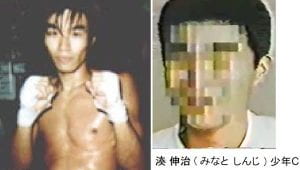
Image of Minato via https://www.tokyoreporter.com/crime/junko-furuta-killer-again-on-trial-chaos-in-the-courtroom/

  • While being held captive, Junko mentioned to her captors several times that she regretted not being able to watch the last episode of her favorite show, Tonbo (Dragonfly) とんぼ. This was the motive of Miyano placing the VHS of the show in her travel bag. He placed it in her bag not because he pitied her, but because he wanted her to be able to watch it after she died and not haunt the boys.

January 23, 1989, Miyano and Ogura were convicted and arrested for the gang-rape of the 19-year-old girl whom they had kidnapped in December while still having Junko. Not knowing if Ogura confessed to the crimes against Junko, Miyano told the police exactly where to find her body. The officers were puzzled by the confession, believing that he was referring to the murder of a different woman and her seven-year-old son that happened nine days before Junko’s abduction, a case that remains unsolved to this day.

January 24, 1989, the police found the exact drum containing Furuta’s body. She was identified through fingerprints. On April 1, 1989, Ogura was arrested for a separate sexual assault case and re-arrested for the murder of Junko. Watanabe, Minato, and Minato’s brother’s arrests followed. Several other perpetrators’ arrests followed for abusing and raping Junko, including Tetsuo Nakamura and Koichi Ihara, who was charged with rape after their DNA was found inside and out of Furuta’s body.
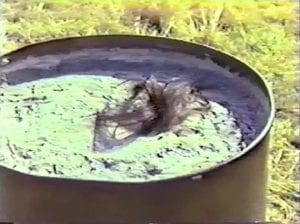
Image of Junko’s body finally being found inside the concrete drum via https://japaninsides.com/44-days-of-hell-the-story-of-junko-furuta/

Sources:

https://yen.com.gh/facts-lifehacks/biographies/227111-what-happened-junko-furuta-killers-everything-know/

https://www.tokyoreporter.com/crime/junko-furuta-killer-again-on-trial-chaos-in-the-courtroom/

https://kileystruecrime.squarespace.com/kileystruecrimeaddict-blog/the-murder-of-junko-furuta

https://en.m.wikipedia.org/wiki/Murder_of_Junko_Furuta

https://japaninsides.com/44-days-of-hell-the-story-of-junko-furuta

The Skinning of Katarzyna Zowada

The Skinning of Katarzyna Zowada


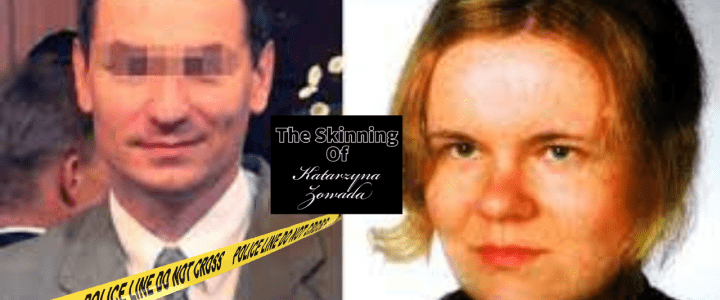
0-1.jpgOur story begins on January 7th, 1999, in Kraków, Poland. A large tugboat is chugging down the Vistula river when one of the operators has to open the hatch to the propeller to get something out. It seems as though something had been stuck in it since the night before &  but hadn’t worked itself out yet. Expecting to find debris or branches the operator is stopped in his tracks. Not sure what he’s looking at, he thinks it is a pale sack. Then he noticed the human ear at the top of the sack & the rancid smell. 


00.PNGUpon further investigation, it was confirmed that those were the remains of a Polish 23-year-old religion study student named Katarzyna Zowada (cat-er-a-zee-na). Her legs were missing as well as her arms & face. What was found was just her torso connecting her neck & ear. But what was even weirder was that it was like a skin suit. As in she was skinned, & a bodysuit was made out of it, leaving all the internals behind. This is why the operator thought the body was a sack. The medical examiner concludes that this portion of her skin had been in the water for roughly 2-3 weeks before getting stuck in the propeller. Investigators found a part of her sweater at the scene & one of her legs was found nearly a week later in a dam. 


The Investigation

It’s concluded that Katarzyna was Skinned alive & a lot more. It is also discovered that she was reported missing on November 12th, 1998 but police told her mother to hold off. They assumed she had just run away. She was going to Jagiellonian university but two weeks prior had stopped attending. At the time though she wasn’t missing because people were still seeing her, she just wasn’t going to class. She had been diagnosed with depression as well after the death of her father in 1996. All of these combined led her mother to be extremely worried about her wellbeing for those two months before her body was found. 

Investigators & experts from other counties were eventually asked to help because they had no leads. Even the FBI helped for a while but still nothing. The case was then dropped about a year later & considered cold. It isn’t until 15 years later, in 2014, when the FBI decides to take another look at the case. 


The reopen

In 2016 they decide that the murderer must have been trained in a specific type of martial arts because of the way she was beaten but they never disclose how she was beaten or what that has to do with martial arts. In 2017, 19 years after the murder, police finally arrest after finding new evidence. 

The man was 52-year old Robert Janczewski. He lived off of the bank where Katarzyna’s body was found, he fit the profile, & was trained in martial arts in this specific category. He also knew Katarzyna before the murder. In the past, he worked in a dissection lab so he knew how to dissect human bodies. He had also worked at a zoology lab, specifically how to prepare animal skins. He was even fired from that same job for killing all of the test rabbits during one of his shifts for no reason. He was even a person of interest in 1999 but was not looked into enough.

The police were made aware of Robert because one of Robert’s friends had written them a letter about him and the case. The contents of the letter were never disclosed publicly beyond that quick summary. 


What we do know (TW)

Although much of the case remains a mystery, we do know how it all went down or at least, how she was killed. Experts concluded that she was beaten profusely, had her groin, armpits, & neck cut, had her organs taken out, limbs cut off, skinned, and mind you, all of this occurred while she was still alive so she felt all of it. She would eventually die of blood loss. 


Current status

To this day, Robert has still not been charged & is in jail until his inevitable trial. So we still don’t truly know why he did it or if it was even him. The case is still going but justice is yet to come. 

T.V True Crime Time

T.V True Crime Time

True crime T.V shows are cool stories to watch in your free time or when getting something done. True crime can be stealing, murder, robbery, etc. In the shows, it can be about justice, how they did it, what was going on in their minds when they did it. True crime T.V shows aren’t fake set up crimes, they are things that did happen. There are a few true-crime series that most people would recommend others to watch so here they are.


Forensic Files

Forensic Files is a 14 season show about technical experts that find every little detail using forensic science to solve crimes. The show follows each murder case to the courtroom for the criminals to receive justice. They interview family, friends, people from the investigation, and guest members to talk about the murder and how they solved it. Forensic files go into detail about how they solved the murder using forensic science. The show started on April 23, 1996, and ended on June 17, 2011. The creator of the show was Paul Downing and the writers were Paul Downing, Tom Jennings, Vince Sherry, William J. Flood, and Michelle Katz. Finally, about 93% liked the show and 7% disliked the show.


Criminal Minds

Next is Criminal Minds, the show is 15 seasons long and is about the FBI getting into the minds of the criminals and trying to outsmart them before the criminals strike again. Each member of the “mind hunter” team brings his or her expert mind to pinpoint their motivations and find emotional triggers to stop them. The core group includes an official profiler, he is highly skilled at getting into the minds of criminals. He is a quirky genius, the former media liaison who manages to adeptly balance family life and his job, and is amazing with computers. The show started September 22, 2005, and ended in 2020 on February 19th. Lastly, 6% didn’t like the show while 94% did enjoy the t.v show.


The Vow

The Vow is 1 season, the show is about the experiences of people deeply involved in a self-improvement group, the NXIVM. It is an organization under siege with charges including racketeering conspiracy brought against its highest members and founder Keith Raniere. About 84% of people liked the show and 16% did not. It began on August 23, 2020, and it is still going to this day. Finally, the producer and creators of the show are Victor Buhler, Jehane Noujaim, and Karim Amer.


Fear City

Last but not least Fear City, is also 1 season long and it is about the mafia. Five Mafia families controlled New York in the 1970s and ’80s until a group of federal agents worked to take them down. The show has been running since July 22, 2020. The show even got its movie called, “Fear City: New York v.s The Mafia” The producer is Bernadette Higgins and the show has a few nominations and Awards for the British Academy Television Craft Award for Titles & Graphic Identity. Finally, about 62% enjoyed the t.v series while 38% disliked it.


Conclusion

In conclusion, these are very popular and amazing true crime t.v shows. Watching it all go down with the evidence, the twists, and turns, and just knowing that they receive their justice is incredible. It’s amazing to watch it all unfold in front of your eyes. From Fear City to Forensic files it is truly amazing how we have found ways to deal with these situations. In the end, true crime shows are one of the best series to watch, if you run out of t.v. show to watch, start with these.

Part 2: The Murder of Sydney Loofe

Part 2: The Murder of Sydney Loofe

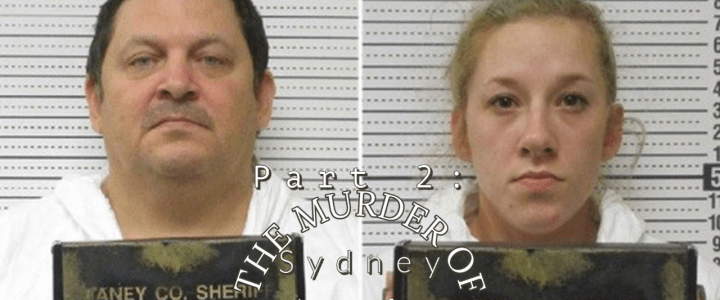
On November 30th, the FBI finds Bailey & Aubrey in a hotel in Missouri & takes them back to Nebraska on their other charges. It is discovered that at 10:35 am, the day of Sydney’s disappearance, both Aubrey & Bailey purchased a hack saw, duct tape, utility knives, bleach, drop cloths, & tin snips. They were inside the Home Depot for a total of 12 minutes. They are seen clearly on video surveillance. Later, after they had purchased these items, Aubrey is seen going to Menards during Sydney’s shift. He looks at her, into his pocket, back at her, & then calls Bailey.

On December 4th, 2017, the first of Sydney’s remains were found. A search team comes across a trash bag in the middle of a ditch with an arm sticking out of it. It wasn’t her whole body that was found because it had been dismembered. Her organs were missing including her tongue, kidney, & heart. They were able to identify the body fairly quickly because Sydney had a tattoo on her arm that read “ Everything will be wonderful someday.”

Around six months after the first of her remains were found, Aubrey & Bailey are charged with the murder. Aubrey’s defense team immediately tells the media that it was a sex act gone wrong & Sydney had died accidentally of asphyxiation. 

Aubrey & Bailey said that her death was not premeditated & when she died they panicked, put the body in the trunk, cut her up, & dumped her. A note from Aubrey to Bailey tells her what to tell the police & to put the blame on him. This immediately shuts down their story because if it were true Aubrey wouldn’t have to tell her what to tell the police.

It comes out at trial that Aubrey was the leader of a sex cult, Bailey being his sidekick. At the time they were the only two in the cult but several women were in it prior. They wanted Sydney to join the cult. Aubrey claims he also had a history with Sydney. 

Aubrey also claims he is a vampire with special powers & can fly & read minds in the trial. He says only witches could join the cult & if they killed & tortured other women they would also gain special powers like him. He says these killings had to be done as a ritual in the forest under certain moon phases for it to work. 

Three women come forward & testify about the sex cult on trial. One claims she met Bailey on TInder in 2017 & convinced to join the cult. She was given an allowance of $200 a week, lived in the house with them, taken on spa days & overall treated very well. With that though, came some rules like she had to walk naked around the house, she had to participate in any of the events they wanted to do, she had to steal with them, etc.

The prosecution claims at trial that while Sydney was on a date with Bailey, Aubrey came out & strangled Sydney with an extension cord. They claim that she didn’t know Aubrey like he previously claimed. They then cut her body into 14 pieces & dump her into trash bags about an hour and a half away from her home. To this day only 13 of the 14 pieces have been found, that being her upper left arm. 

At trial, Aubrey pleads guilty to unlawful disposal of a body but not guilty to murder & to conspiracy to commit murder. Still claiming that the death was accidental. But there were marks on the back & top of her head & had restraint marks on her wrists.

In the middle of trial one day, Aubrey sitting in the corner of the room yells “Bailey is innocent & I curse you all!” & slits his own throat. Everyone jumps up & freaks out of course & he is immediately taken to the hospital where he survives.

Once Aubrey is done healing he is taken back to finish the trial, this time handcuffed to his seat.

After only three hours of deliberation, Aubrey is found guilty by the Jury of first-degree murder & conspiracy to commit murder. He was then sentenced to the death penalty. 

Bailey was found guilty of first-degree murder, Unlawful disposal of a body, & conspiracy to commit murder. In early November 2021, Bailey was sentenced to life in prison without the possibility of parole. She too showed little sympathy but was grateful she wasn’t getting the death penalty for the sake of her daughter whom she had with her ex-husband.

Part 1: The Murder of Sydney Loofe

Part 1: The Murder of Sydney Loofe

In honor of the fourth anniversary, & a sentencing occurring only earlier this month, I thought it would be good to inform people about this case. 

The day is November 14th, 2017, in Lincoln, Nebraska. 24-year-old Sydney Loofe who worked as a cashier at Menards had just matched with a girl named Bailey. They talk on Tinder back & forth & share roughly 140 messages before deciding to meet up that night. They hung out, smoked a bit, but in all, they hit it off & had an amazing time. The next day they decide to go on another date. She is extremely excited to go on another date & is telling her friends all about the first one & how happy she is. The last message from Bailey to Sydney is at 6:45 pm stating that she is outside waiting to pick up Sydney Loofe.

The next day, November 16th, 2017, Sydney doesn’t show up for her shift at Menards. Friends & family begin to worry & panic as no one can get a hold of her. It was all so unlike her & everyone knew something had gone wrong. Sydney’s mom reported her as missing after no one in Sydney’s life had heard from her since before the date. With not much to go off of & Sydney being an adult, her family didn’t know what to do. No one knows the name of the tinder date she went on but it seemed like a good place to start since that was the last time she had been seen. Since Sydney had shown some of her friends a picture of the girl she was going on a date with one of them thinks maybe if they were to see the picture again they could identify her so the way they do that is by making a tinder account & swiping until they see the picture. 

This is when they find 26-year-old Bailey Boswell. They take her contact info & give it to the police since Bailey is the last known person with Sydney before her disappearance. Upon investigation, they find out Bailey has a 51-year-old boyfriend named Aubrey Trail whom she lives in Wilber, Nebraska. They try to locate Bailey after seeing that Sydney’s phone last pinged in Wilber but it seems as though Bailey & her boyfriend have taken off. This is seen to law enforcement as suspicious behavior; they are granted a search warrant to the couple’s home after the landlord stated there was an extremely strong bleach-like odor coming from the home. They find the apartment has been cleaned with bleach on every surface & even bleach smears throughout. The police then decide to announce that they are suspects in the case. News outlets start sharing this information. Aubrey & Bailey then see these news stories.

While still in hiding, Aubrey & Bailey post a series of videos on social media stating their involvement with the case. They seem to be in a car in the videos wearing black hoodies with the hood on & Bailey is wearing large sunglasses. They talk about how their names are being slaughtered because of Sydney’s disappearance & think they get to have their side of the story shared. They say they aren’t hiding out from police like what is being said & have spoken to the police several times (which was untrue). Bailey says she dropped Sydney off late that night at a friend’s house due to request after having yet another wonderful time & hasn’t seen or heard from her since. They also mention how they have other warrants out for them which would mean they could get arrested for those offenses since you can’t get arrested if you are just a person of interest. People are confused as to why they kept saying they weren’t in hiding even though they basically had disguises on, were not living at home, & even brought up the fact that they could be arrested if the police found them. At this point, the FBI gets involved in the case.