Why did Amelia Earhart want to fly? The reason Amelia Earhart wanted to fly to support her parents.
Amelia Earhart was born on July 24, 1897. Her goal was to become the 1st woman to fly around the world.
Sadly though, Amelia was presumed dead on January 5, 1939.
Early Life
Amelia Earhart grew up in a wealthy family. As a child she spent a lot of time with her younger sister, Grace. They collected insects and frogs, and they also liked to play sports like baseball and football.
When Amelia Earhart was 7 she took her first “flight”. She had made a roller coaster. After she crashed on the roller coaster she had told her sister that it “was just like flying”.
Amelia Earhart attended a private elementary school in Atcheson, Kansas. She lived there until she was about 12 years old. Her dad had left for Des Moines, Iowa, when she was just about 10 years old. Her sister and her stayed with their mother and grandparents. Amelia Earhart’s dad was a railroad lawyer. He had to travel a lot.
She went on her first plane ride when she was just 10 years old. Even though her legacy was all about flying, that wasn’t what she was thinking at first. She had later recalled saying that “It was a thing of rusty wire and wood and looked not at all interesting.”
Extra Facts
Amelia Earhart’s nickname was “Meeley” and sometimes even “Millie”. Her younger sister, Grace was nicknamed “Pidge”. Both of them would respond to either in their childhood. They both also responded to these through adulthood.
Amelia used to also love to hunt. She used to hunt rats in her father’s barn. She also used to have one live pet, but she used to also have imaginary horses, Amelia’s horse was named Saladin, which was a palomino, and her sister had one named Beezlebub.
Adulthood
Amelia Earhart lived through World War 1. She was 20 years old when it happened. Before Amelia Earhart was famous, she was a nurse’s aid tending to injured World War 1 patients. She attended them in Toronto, Canada.
When she was an adult her popularity brought opportunities from a fashion business to a stint (supplying an ungenerous amount of something) as aviator editor at Cosmopolitan. Then a family magazine.
Her first plane ride was in 1920. She had realized that her true passion was flying. She began taking lessons with female aviator, Nita Snook. On her twenty-fifth birthday she purchased a Kinner Airster biplane. She flew it in 1922 when she set the women’s altitude record of 14,000 feet.
In 1928 Amelia Earhart became the first woman to fly across the Atlantic as a passenger in the Fokker F. seven with two male pilots. In 1929, following the Women’s Air Derby, Amelia Earhart called a meeting of female pilots. Also in 1929 Amellia made her first attempt at competitive air racing during the first Santa Monica-to-Cleveland Women’s Air Derby. It left Santa Monica, California, on August 18 and arrived at Cleveland, Ohio.
On April 8, 1931 Amelia Earhart set a world altitude record of 18,415 feet. She also got married the same year. In 1932 Amelia Earhart became the first woman to fly across the U.S. nonstop. In 1933 Amelia Earhart debuted a functional clothing line. Only three years before she had disappeared, she spent a weekend in Atlanta recruiting female pilots; she had also flown an Atlanta Constitution reporter over the city.
On January 11-12, 1935, Amelia became the first person to fly solo from Hawaii to the U.S. mainland. In 1936 she landed her Lockheed Electra at Bendix Field in South Bend. On March 17, 1937, she took off from Oakland and flew west on an around-the-world attempt. It would be the longest global flight. Sadly though, Amelia Earhart had gone missing during the flight.
Autism’s journey resembles a kaleidoscope—once an indistinct blur, now a vibrant and lucid spectrum, continuously evolving as new patterns of understanding emerge. Autism was once mistaken for schizophrenia, but it is now a celebrated spectrum.
This article covers autism history from 1952 to now, serving as a go-to for those seeking information in the U.S.
It started as schizophrenia but tests and consultations distinguished it as Autism Spectrum Disorder.
Understanding autism’s journey requires looking back at its historical roots.
Historical Perspectives
In 1952, many conflated autism with childhood schizophrenia or cold parenting.
(Read my last article for an explanation of Schizophrenia.)
In 1980, autism was reclassified as pervasive developmental disorder, distinct from schizophrenia and different from today’s understanding.
As perceptions shifted, so did the frameworks for understanding autism.
As the understanding of autism evolved, researchers faced significant challenges in distinguishing it from other conditions like schizophrenia.
Evolution of Understanding
In the early years of autism research, distinguishing autism from other conditions like schizophrenia posed significant challenges.
Many children exhibiting autistic traits were often misdiagnosed with schizophrenia due to shared symptoms such as social withdrawal and communication difficulties.
These misconceptions were further fueled by societal beliefs that attributed such behaviors to cold parenting or emotional disturbances.
The DSM’s Role: Defining Autism Over the Decades
Recognizing the need for clearer diagnostic criteria, authorities implemented the DSM (Diagnostic and Statistical Manual of Mental Disorders) to elucidate autism diagnosis but left much open to interpretation.
Although the initial editions left much open to interpretation, they marked a crucial step toward understanding autism as a distinct condition.
The DSM’s evolving definitions played a pivotal role in shaping diagnosis, gradually moving away from the conflated views of autism and schizophrenia.
It was published in 1952 with limited focus on autism.
Researchers recognized autism as a mental disorder affecting development, not just a product of their early environment.
Recognizing these challenges, the introduction of the DSM marked a critical step forward.
DSM-II
Published in 1968, the DSM-II marked a pivotal moment as the second edition of the Diagnostic and Statistical Manual of Mental Disorders.”
It played a crucial role in establishing standardized criteria for psychiatric diagnoses, offering clinicians a unified framework for evaluation.
This edition notably began to distinguish autism from schizophrenia, setting the stage for a more nuanced understanding of developmental disorders. “I am different, not less.”
DSM-III
Then, the DSM-III came out and listed some criteria.
DSM-III Diagnostic Criteria for Autism:
Lack of Interest in People: Individuals may show little to no interest in interacting with others.
Severe Impairments in Communication: Challenges in verbal and non-verbal communication are prevalent.
Bizarre Reactions to the Environment: Unusual responses to environmental stimuli or changes.
Early Onset of Symptoms: Symptoms typically develop within the first 30 months of life
With evolving definitions, the DSM-III played a crucial role in shaping diagnosis.
Later, DSM-III revised the diagnosis, acknowledging that not all cases were extreme, so they added a new condition to their list which they were calling pervasive developmental disorder-not otherwise specified. This lengthy term described milder cases.
Building on these advancements, the DSM-IV further refined the classification of autism, inching towards a broader spectrum.
DSM-IV
Although it didn’t say spectrum, it began inching towards that definition. So instead of schizophrenia, it started being understood as a spectrum of disorders that all were labeled the same thing.
As expert Jordan Hilkowitz said, “Autism is not a tragedy. Running out of bacon is a tragedy.”
An image of the first DSM module.
Between 1994 and 2000, experts labeled autism as a spectrum disorder through the DSM-IV, identifying it as five separate disorders:
Childhood Disintegrative Disorder (CDD): More commonly found in girls than boys.
Rett’s Syndrome
In 2003 they found over 100 genes that could play into autism, but none that were directly linked to it, so they decided to say that is more of a spectrum than a straight diagnosis.
“Our goal is to create a world where everyone belongs.”
DSM-V
The DSM-V was soon released also known as the DSM-5, and only then was the idea adopted of a continuous spectrum.
Before its release, many feared a spectrum diagnosis might disrupt their identity and belonging.
They feared it would reduce their pay and services. However, researchers found it helped more people get diagnosed.
As expert Gilles Trehin illustrates, “Autism is not a problem to be solved, but a reality to be experienced with joy.”
These pivotal changes in diagnostic criteria were driven by pioneering figures who reshaped our understanding of autism.
Notable Figures in Autism History
Grunya Sukhareva
In 1925, Grunya Sukhareva pioneered the first clinical descriptions of autistic traits.
In the early 1920s, at a children’s psychiatric hospital in Moscow, Grunya Sukhareva observed boys whose behaviors markedly diverged from their peers.
Grunya Sukhareva portrait.
These children were characterized by profound social withdrawal and an adherence to repetitive routines, yet they possessed remarkably intense interests in specific subjects.
Sukhareva meticulously chronicled these traits, capturing the subtleties and nuances with precision.
Her pioneering insights offered one of the earliest clinical depictions of what would later be recognized as autism traits.
This revolutionary work not only redefined contemporary understanding but also laid a crucial foundation for future explorations in the field.
Her revolutionary work provided early insights into behaviors that defined the autism spectrum, predating Kanner and Asperger.
While Grunya Sukhareva laid the groundwork for early autism research, Hans Asperger’s insights further expanded the understanding of the condition.
Hans Asperger
Hans Asperger once observed that “Not everything that steps out of line, and thus ‘abnormal,’ must necessarily be ‘inferior.’”
This perspective was pioneering, as he saw beyond challenges to the talents within, leading to the recognition of Asperger’s Syndrome.
While working at the University of Vienna, Hans Asperger observed a young boy who struggled socially but excelled in languages and math.
Noticing the boy’s potential, Asperger believed these “autistic psychopathy” traits were not deficits but unique strengths.
An Austrian pediatrician in the 1940s, Asperger’s work laid the foundation for understanding a unique presentation of autism.
His pioneering insights challenged conventional views and continue to shape how educators and clinicians perceive autism today.
Leo Kanner
Leo Kanner, often called the ‘father of child psychiatry,’ made a groundbreaking discovery in 1943.
In 1943 at Johns Hopkins Hospital, Leo Kanner studied 11 children exhibiting traits such as social withdrawal and a desire for sameness.
As a psychiatrist at Johns Hopkins Hospital, Kanner was the first to formally describe autism as a distinct condition.
Kanner’s detailed case studies were revolutionary, identifying autism as a distinct condition separate from schizophrenia. His work laid the foundation for modern autism research and diagnostics, shaping the field for decades to come.
Dr. Catherine Lord
She is the leading specialist in autism research today.
Her research focus is developing methods to identify strengths and difficulties in individuals with ASD.
Quote from the Semel Institute: “Her research and clinical work are aimed at improving methods of identifying strengths and difficulties…and working with families and individuals to maximize independence and well-being.”
Her current priority is developing better ways to measure changes in social behavior and communication over short periods, to monitor progress without bias.
Temple Grandin
Temple Grandin, a renowned animal behavior expert and advocate for autism awareness, has transformed livestock handling practices through her innovative designs.
Her unique perspective as an individual with autism not only revolutionized the industry but also serves as a powerful reminder of the value of neurodiversity.
Grandin revolutionized livestock handling by leveraging her unique perspective, illustrating how autism can lead to groundbreaking innovations.
Greta Thunberg
Greta Thunberg, a trailblazing climate activist, has become a leading voice in the fight against climate change.
She openly shares her experiences with autism, viewing it as a gift that enables her to focus intensely on her mission.
Her straightforward communication style has inspired millions worldwide, demonstrating the powerful impact of embracing neurodiversity.
Thunberg’s story highlights how individuals with autism can drive significant change, reflecting the evolving understanding of autism as a spectrum of diverse talents and perspectives.
Dan Aykroyd
Dan Aykroyd, a comedy icon and actor, has left a lasting mark on film and entertainment.
Candid about his autism, Aykroyd credits his inventive genius to his singular perspective.
His fascination with the paranormal, a special interest shaped by his autism, led to the creation of the beloved ‘Ghostbusters’ franchise.
This iconic film exemplifies how Aykroyd’s neurodiversity fueled his inventive storytelling and humor.
Aykroyd’s journey highlights the powerful role of autism in fostering creativity and innovation, underscoring the importance of embracing diverse perspectives within the arts.
Reflecting on these contributions highlights the profound impact of autism’s evolving story.
The journey of autism, from shadow to spectrum, reflects decades of change, impacting countless lives with newfound understanding and acceptance. As we look at these shifts, it’s clear they offer more than just awareness—they offer hope and belonging.
Kathleen Seidel once said, “Autism is as much a part of humanity as is the capacity to dream.” This quote beautifully captures the essence of autism’s journey, reminding us that embracing neurodiversity enriches our shared human experience.
These stories remind us that autism is not just a diagnosis but a spectrum of diverse talents and perspectives. As Temple Grandin, Greta Thunberg, and Dan Aykroyd show, embracing neurodiversity enriches our world in unexpected ways.
As you reflect on this article, consider your role in fostering a world where everyone belongs. Your actions today can shape the spectrum’s future tomorrow, ensuring that dreams and understanding continue to flourish.
Comment if you have learned anything. Have a great day, and thanks for reading!
The Voynich Manuscript is a handwritten book, carbon-dated to the early 15th century (around the 1400s). It’s written in an unknown language that many call “Voynichese”. Many of the pages contain simple drawings of a variety of subjects. The entire codex currently has a total of 240 pages, however there are some that appear to be missing. Using the page numbering written inside of the book, and investigating the gaps between pages, it’s suspected that the whole manuscript once had around 272 pages in total.
A Brief Description
The manuscript doesn’t have an official name, only commonly referred to as “The Voynich Manuscript” after a man named “Wilfrid Voynich”. Voynich purchased the book some time in 1912. Later, in 1969, the manuscript made its way in Yale University’s Beinecke Rare Book and Manuscript Library. A few years ago, back in 2020, Yale University published the entire manuscript online for their digital library.
After many years of investigation and study, the language remains undeciphered. Many professionals and codebreakers attempted to decipher it during both world wars, but were unsuccessful.
The Investigation
As stated before, the pages had been carbon-dated to the early 1400s, sometime around 1404 to 1438. The manuscript had also been protein tested, showing results that the pages were made of calfskin, composed of at least 14 entire calf skins. Goat skin composes the binding and covers.
Polarized light microscopy had revealed that the ink the manuscript had used consisted of iron gall ink written with a quill pen. The ink was used for both the writing and the outlines of the drawings. Extra analysis provided evidence that the ink had traces of many different minerals, such as carbon, iron, sulfur, potassium, calcium, copper, and zinc.
Paint had covered the pages to color in the ink outlined drawings. All the colors have been analyzed. The blue paint was made of ground azurite with small amounts of copper oxide cuprite. The white paint consisted of calcium carbonate and egg-white. The green paint had copper-chlorine and atacamite. Finally, the red paint was made of red ochre, with traces of hematite and iron sulfide.
The text had many unknown characters, with some only showing once or twice. It reads from left to right, and there is no punctuation. Most of it is written in a single column with paragraph divisions and a jagged right margin. Over 170,000 characters are counted within the manuscript.
The illustrations and text both have characteristics of a European origin. For further evidence, the materials in the paint that was listed above consisted of minerals usually obtained from Europe in the suspected timeframe the book was written.
The History
Georg Baresch is one owner of the manuscript, being its first confirmed owner. Georg was a Prague alchemist from the 17th century. While the book was being stored in Georg’s library, a scholar named Athanasius Kircher had published an Egyptian dictionary. Georg sent a sample of the book to Athanasius, asking him to send him a translation. As the manuscript is not written in egyptian, the book was never translated. Athanasius acquired an interest in the manuscript because of this.
Athanasius asked Georg to send him the entire manuscript, but Georg refused. After Georg’s death, the book was given to his friend, Jan Marek Marci, who also happened to be friends with Athanasius. The manuscript was swiftly given to Athanasius.
The manuscript stumped Athanasius, so it was stored in the Collegio Romano library for two hundred years. The manuscript remained in this library until Victor Emmanuel II of Italy annexed the Papal States. Victor’s new government wanted to seize church properties, which included the library the manuscript was stored in. The book eventually made its way to a private library owned by the Society of Jesus.
Sometime in 1903, the Society ran low on money. The Vatican Library offered to purchase some books from them, which they succeeded in. 30 different books were shipped to the Vatican library. One of these books was the Voynich Manuscript itself. Wilfrid Voynich, the man listed before whom the manuscript was named after, acquired these books, and noticed the manuscript. He didn’t recognize the language, so for the next several years he urged scholars to attempt to decipher the manuscript.
Shortly after Wilfrid’s death, the manuscript was passed down to his wife, Ethel Voynich. Later, when Ethel died, it was passed to her friend Anne Nill. Sometime after, Anne sold the book to Hans Kraus, an antique book dealer. Being unsuccessful in finding an interesting customer, Hans donated the manuscript to Yale University, where it sits to this day still unsolved.
At this point in the NBA playoffs, the Minnesota Timberwolves have beat the Phoenix Suns 4-0 and are the only team to move on to the second round. The New York Knicks, Denver Nuggets, and Indiana Pacers are up in their series 3-1. The OKC Thunder are 3-0 in their series and the Boston Celtics are up 2-1 in their series. The LA Clippers and the Cleveland Cavaliers are both 2-2 in their series.
Now my predictions are that in the New York Knicks Philadelphia 76ers series, the New York Knicks will win in 6 games, move on to the second round, and play against the Indiana Pacers who will win in 7 games almost allowing the Milwaukee Bucks to win. My next prediction in the east is that the Boston Celtics will win in game 5 and go against the Cavaliers who will win in game 6. Heading to the west I believe the Nuggets will beat the Lakers in game 5 to play the Minnesota Timberwolves in the second round. The Thunder will sweep the Pelicans in 4 games and play the Mavericks who will win in game 6.
In the second round, my predictions are that the Timberwolves will beat the Nuggets in 5 games and play the Mavericks in the conference finals who will beat the Thunder in game 6. I predict that the Boston Celtics will beat the Cavaliers in 6 games and go against the New York Knicks who will beat the Indiana Pacers in 7 games. Now the final teams in my prediction for the NBA playoffs are as follows. In the western conference finals Minnesota Timberwolves vs Dallas Mavericks and the east conference finals are the Boston Celtics vs the New York Knicks. Now game 1 in the conference finals my predictions are that the Celtics will win by 7 and the Timberwolves will win by 12. In the next game ( game 2 ) the Knicks will win against the Celtics by 5 and the Timberwolves will win by 6. In the east, the Celtics are tied in their series 1-1, and in the west, the Minnesota Timberwolves are winning their series 2-0. Things aren’t looking good for Luka and the Mavs, there is a reason Mark Cuban sold the team. Anyways, In the next two games the Celtics will once again trade games with the Knicks and their series will go 2-2 but on the other hand, the Mavericks will take one game but then lose game 4. Celtics vs Knicks tied 2-2 and the Timberwolves vs Mavericks, wolves winning 3-1. In the next game the Timberwolves will move on to the NBA finals and the Celtics will move on in game 6…
2024 NBA finals Boston Celtics against the Minnesota Timberwolves. In game 1 the Celtics will win 96 to 90 game 2 the Wolves will win 102 to 95 and in game 3 the Wolves will win again 89 to 78 Things are looking great for Anthony Edwards and the Timberwolves, they are up 2-1 in the finals and are 2 wins away from winning it all. But they can’t celebrate too soon, The Boston Celtics will win the next game and now the series is headed to game 5 with the series tied 2-2. In a nail-biting game the Wolves will win and will now go up 3-2 in the series. Heading to game 6 all the Wolves have to do is win one more game. In the 4th quarter of game 6, the Wolves are down by 6 with 75 seconds left and they somehow come back and win the NBA finals!!!!!!
Anthony Edwards atthe age of22 won Finals MVP and his first ever NBA finals win.
Marsha P Johnson had a crucial impact on the LGBTQ+ community and activism all together. During her lifetime, she accomplished many amazing things.
Credit: Wikimedia Commons
Background
Marsha was born on August 24th, 1945 in Elizabeth, New Jersey to parents Malcom Michaels Sr., who Marsha was originally named after, and Alberta Claiborne.
Marsha P Johnson lived in New York in the 1940s-90s and was a huge advocate for gay & trans rights, homeless LGBTQ+ youth, and people with HIV or AIDS during the gay rights movement in the 1960s. She was also involved with the Stonewall uprising.
Marsha was a drag queen that used she/her pronouns; however, the term “transgender” would only be used and popularized after her death.
Growing up, Marsha had to turn to sex work as a form of money because there was no opportunity for people within the LGBTQ+ community at the time. She was often abused by clients and arrested by police. It was difficult and unfair to not only her but considering all the people within the community that might have taken the same way that Marsha did.
Marsha always said that the “P” in her name stood for “Pay it no mind” which was her motto. She also often told people that when asking about her gender. Her uprising was the reason she became the activist she was. She had such a big heart and so much sympathy for people in need and those who needed help.
Stonewall
Many people think that Marsha was the person that threw the first brick but this is false as she arrived at 2am. Marsha arrived at the scene to behold the sight of fires and riots. She saw police being unjust towards the people and she had no problem sticking it to the man and/or getting arrested. Reason being, she was arrested a lot growing up because she was a sex worker. Another reason being that she would have defended members of her community through anything.
Legacy
Marsha’s body was found floating in the Hudson river and police ruled it as a suicide. However, her friends and fellow activists have always been against and disagreed with this ruling because they all knew that even though the world that they lived in dragged her down, she still loved life.
Marsha’s activism and actions paved the way for many opportunities we have in our current world. Marsha walked so modern day LGBTQ+ activists could run. She will forever be remembered and admired.
Do you know who Harvey Hubbell the second is? He was an extraordinary inventor, his best invention is still used today, but in a more developed version, do you know what that is? It is the pull socket, since then it’s been modified into the electric socket, but the basic design of this invention is still used.
Harvey Hubbell’s way to success
Harvey Hubbell the second was born on December 20, 1857, in Brooklyn, New York. His birth was the key to the start of many of our advanced technologies,
Harvey Hubbell was the founder of a manufacturing facility in a loft on Middle Street in Bridgeport, 1888. His manufacturing business was an early success, but not long after, he would have greater success with invention.
In 1891, he invented the Separable Attachment-Plug, the electric switch design. This later developed to the pull-chain electric light socket, 1896.The pull-chain electric light socket was modified again on November 8, 1904. This was modified into a detachable electric plug, the first ever in the United States.
When Harvey Hubbell the third’s father, Harvey Hubbell the second, died, he took over the manufacturing facility as president, and only when he was at the young of 26.
Bridgeport Library, said that, “The firm grew from a $1 million annual business in 1927 to a $21 million a year business in 1963.” Basically saying, Harvey Hubbell the third improved his father’s manufacturing businesses income drastically as he drove the company in a money making path that does good to the country while they’re at it.
Though his father did a lot for the company, Harvey Hubbell also invented many of the products. Even with new manufacturing devices, the pull socket was, of course, still the most remembered. Considering that it was a big step to advance in technology.
This business was a great success, acknowledging the fact that the business still stands today. The business is now named Hubbell Industries, and the headquarters is in Shelton Connecticut, but it is still found all over the world.
Next time you go to plug something in, or to charge a phone with a charger, think about how far back the electric plug went, and know that it was 1896, that man was a key role in charging your phone or getting technology access. Always be grateful for this man, who helped with our technology advancement, and all the others who helped with this invention. Along with the modifiers who make amazing technology for us.
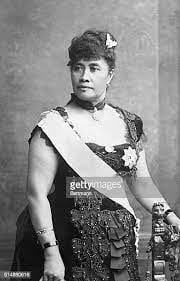
This story takes place in the Hawaiian monarchy on January 17th, 1893. This was the day Queen Liliuokalani was illegally overthrown by the U.S.
Credit:Encrypted
Beginning
The first known Hawaiian settlers date back as late as the 8th century until the 18th century. In 1830, the sugar industry was introduced by white missionaries and got really big in Hawaii. But in 1840, the same white missionaries created a constitutional monarchy that basically stripped the Hawaiian monarchy of their authority and power.
In the year 1887, Pearl Harbor was established as a naval base as part of a new Hawaiian constitution. White missionaries and businessmen impacted the social and economic culture of Hawaii very negatively. Almost all culture was prohibited. Meaning the natives weren’t allowed to teach the language or Hula dances. Then in 1891, Liliuokalani, the sister of late King Kalakaua, took the throne and refused to recognize the constitution established in 1887. Instead, she replaced it with a constitution that increased her own personal authority.
Leading Up To
There was a lot of tension between the kingdom of Hawaii and the white business men/missionaries for quite some time. Between the white people trying to replace the government and the Hawaiin’s not taking any of it, there was a lot of unresolved political tension. Then, in January of 1893 Stanford B. Dole created the “Committee of Safety” and staged a coup(a sudden, violent, and unlawful seizure of power from a government) against the Queen.
A team of 13 caucasian missionaries/businessmen forced the queen to abdicate (renounce the throne) on January 17th. If queen Liliuokalani hadn’t decided to abdicate, there was a very big threat of bloodshed. She once stated, “I have pursued the path of peace and diplomatic discussion, and not that of internal strife.”She chose the peaceful way out.
Forever Queen
Queen Liliuokalani was extremely against the annexation of her land. She thought, “Hawaii for the Hawaiians.” which is pretty self explanatory. The land of Hawaii was for the people of Hawaii. She wasn’t being a nationalist, she was simply a devoted and loving queen. Liliuokalani wrote the song Aloha ‘oe, for those that don’t know in the Disney movie “Lilo and Stitch” this is the song that Nani sings to Lilo the night before she is to be taken away from Nani. It is a melancholy song of goodbye and until we meet again. The lyrics read:
Haʻaheo e ka ua i nā pali
Proudly swept the rain by the cliffs
Ke nihi aʻela i ka nahele
As it glided through the trees
E hahai (uhai) ana paha i ka liko
Still following ever the bud
Pua ʻāhihi lehua o uka
The ʻāhihi lehua of the vale
Hui:
Chorus:
Aloha ʻoe, aloha ʻoe
Farewell to thee, farewell to thee
E ke onaona noho i ka lipo
The charming one who dwells in the shaded bowers
One fond embrace,
One fond embrace,
A hoʻi aʻe au
Ere I depart
Until we meet again
Until we meet again
ʻO ka haliʻa aloha i hiki mai
Sweet memories come back to me
Ke hone aʻe nei i
Bringing fresh remembrances
Kuʻu manawa
Of the past
ʻO ʻoe nō kuʻu ipo aloha
Dearest one, yes, you are mine own
A loko e hana nei
From you, true love shall never depart
Tomago:
Refrain:
Maopopo kuʻu ʻike i ka nani
I have seen and watched your loveliness
Nā pua rose o Maunawili
The sweet rose of Maunawili
I laila hiaʻai nā manu
And ’tis there the birds of love dwell
Mikiʻala i ka nani o ka liko
And sip the honey from your lips
Hui
Chorus
There are many different backstories as to why and who she wrote the song about. But given the historical context, this song is to the people and is a huge part of Hawaiian culture.
Farewell
Queen Liliuokalani was a great ruler. Loved by her people, such a smart woman. The events that happened to her during her rule were cruel. Nevertheless, she was remarkable and shall forever be remembered. Aloha ‘oe, until we meet again.
On March 31st, it will have been 28 years since the young singer Selena Quintanilla passed away. She was 23 when she was shot by Yolanda Saldívar at the Days Inn in Corpus Christi, Texas.
Credit: Flickr
Early Life
Selena was born on April 16th, 1971 in Lake Jackson Texas to Abraham and Marcella Quintanilla.
Selena’s career started when she was 9. She had a band with her siblings, A.B and Suzette Quinatilla, which her father called Los Dinos. They played at their family restaurant, (Pappagallo) weddings, and local events. Their father taught them how to play instruments and sing in Spanish.
Credit: Flickr
Selena y Los Dinos dropped their first album in 1984 when Selena was only 12 years old. But when Selena signed under EMI Latin, the record claimed that people would only want to see Selena, not the Los Dinos so she started releasing her own singles under the same Selena. She has released 11 albums, 6 with the Los Dinos, in her duration as an artist with 7 #1 hit songs.
Success
Throughout Selena’s career, she was nominated for 90 awards and had 68 wins. She has been called “Queen of Tejano Music” not only by major new outlets but the community she impacted most.
Selena won her first grammy in 1994 for Best Mexican-American Album for Live. Which made her the first female Tejano artist to win in this category. Additionally, she won another grammy in 2021 as a Lifetime Achievement Award.
Selena performed at the Astrodome in Texas on February 26, 1995 to a sold-out crowd. It was sadly her last performance.
Side Quests
Selena was also known for her iconic looks. She took a passion and joy in designing clothes. The “Mexican Madonna” is what it was called because it was a fusion of American and Mexican style. Truly iconic and successful that Selena opened two boutiques in Texas which earned her millions.
She got married to a man named Chris Pérez on April 2nd, 1992 who later joined her band. They had no kids together. In the beginning, Abraham didn’t approve of their relationship for fear that he would ruin Selena’s image but long story short the two didn’t care.
Tragedy
On February 26th, 1995 Selena performed at the Astrodome in Texas. Which was huge in her career because the show was sold out and televised. It is her most iconic performance but sadly the last. A month later, she passed away.
Sadly, Selena was shot by the president of the Selena fan club, Yolonda Saldívar, a friend. Saldívar was also the maintainer of one of Selena’s boutiques but she was secretly embezzling funds. Saldívar asked Selena to meet her at a hotel where Selena confronted Saldívar about the stolen money. When confronted, Saldívar shot Selena causing one of her arteries to be severed. She died from the amount of blood she lost.
Saldívar was charged with first degree murder and is currently serving 30 sentenced years in prison; she will get parole in 2025.
Fans all over the world were absolutely devastated by the news. Texas Governor Goerge W. Bush declared April 16th to be Selena Day. Her husband got into substance abuse after the murder. However, now Selena does have a museum in her hometown where it showcases her iconic outfits and breathtaking life story.
Closure
There is no doubt that Selena left a big impact and such a legacy. Fans have never stopped loving her music. She was stunning and iconic and it truly is a shame that her career didn’t get to see all the parts it deserved but she has to be one of the most beloved tejano artists. Descansa en paz alma hermosa.
How often do you walk around a house or a building and you feel the nice cool air? But do you really know who got us air conditioning in the first place, if you don’t, read on and learn all about Willis Carrier.
Willis Carrier was born in Angola, New York, November 26, 1876. He got an engineering degree from Cornell, and then got a job at Buffalo Forge Company. After, finally making it to his biggest accomplishment: created the world’s first (modern) air conditioning system, in 1902. He installed this new invention in New York, Sackett & Wilhelms printing plant in Brooklyn.
Carrier didn’t stop there though, he developed the Rational Psychrometric Formulae, to explain more about the air conditioning system. And he kept going, in 1915 he made his own business, called Carrier Engineering Corporation.
Carrier Willis was also the cause of some first accomplishments in American history, such as, he hired America’s first woman to work as air conditioning engineer, in 1917. In 1931, a vessel, M.V. Victoria, was the first to make a voyage with Carrier’s air conditioning system.
Willis Carrier’s successes kept going on, even when he died on October 7, 1950, in New York N.Y. He was included into the National Inventors Hall of Fame in 1985. In 1998, he was named in one of TIME magazine’s as in the article “100 Most Influential People of the 2oth Century.
Whenever you feel that cool breeze in your house on a summer day, thank Willis Carrier for it.
Rabbits have been neglected and abused for years and it is not okay anymore. Rabbits are used for food, fur, and simply for a pet but most people that own a bunny are mistreating them.
Pet rabbits
If you are looking into getting a pet rabbit that’s great, if you know what you’re doing that is. Most people mistreat their rabbits by accident or for content. This is not okay because bunnies are very sensitive animals. You have to remember they are prey animals not predators. What makes people the most inferated by people who own rabbits is, some bunny owners let their ten and under kids care for them and that goes down bad. For example my neighbors cousins had bunnies and their four year olds were playing with them unsupervised. The kids ended up throwing the bunny across the room and the sweet little baby bunny died.
Meat
It is very tragic but there are companies out there that harvest thousands of rabbits for meat. Some companies use domestic rabbits { rabbits that are pets } for their meat which is very horrifying and gross.
Animal abusers
Animal abusers have been known for picking up rabbits and other small animals to kill, mutilate and torture rabbits. For example, Patryk Sochocki bought a rabbit from the local pet store and cut off its hind legs, tail, and genitals with a pair of scissors. The police found the man with bottles of alcohol, and a strong smell of marujana. The rabbit was rushed to a local animal hospital, but sadly passed away from bleeding out too much. Another case of animal abusers abusing rabbits, Dorota Trec, a music teacher who was found keeping her rabbits outside and not taking care of them. The A.S.P.C.A took dozens of rabbits away from here and then came back three days later to get the rest. When they were looking closely at them they realized, two thirds of the rabbits had wounds due to bites. Half of the rabbits tested positive for syphilis, nearly three dozen had genital or anal trauma.
Parents
Parents are one of the biggest problems for most animal abuse cases .
Most parents leave their kids or people around these rabbits and don’t think of it. They come back later to find their pet bunny dead. So when you have pet rabbits you have to be mature and have a good right mindset. If you lack that kind of responsibility you probably should not own a pet bunny.
Doing your research
Getting a new pet is exciting but you have to do your research or else you can abuse that animal or harm it without you even knowing. When you get a bunny on the other hand people think “oh there like rodents there rodents. But no they are not rodents and no they should not be put into cages. Bunnies are super needy and if you can’t provide that care then either try to make it work or change your ways but when worse comes to worse don’t get the bunny. When you put it into perspective every animal and human is needy but with rabbits it’s not like putting it in a cage all day and never letting the bunny out. If you do that you can get charged or even worse arrested. When you are taking care of a rabbit don’t put it outside, let it in your home and free roam. When you have a pet bunny give them attention and love treat a bunny how a dog or a cat would be treated. Give your bunny the right kind of food. And most importantly, do your research.



 if you have learned anything. Have a great day, and thanks for reading!